01Weather advice should be simple.
Wardrobe apps can personalize outfits, but setting them up takes time. Weather apps give you instant recommendations, but they’re generic and don’t account for your personal preferences.
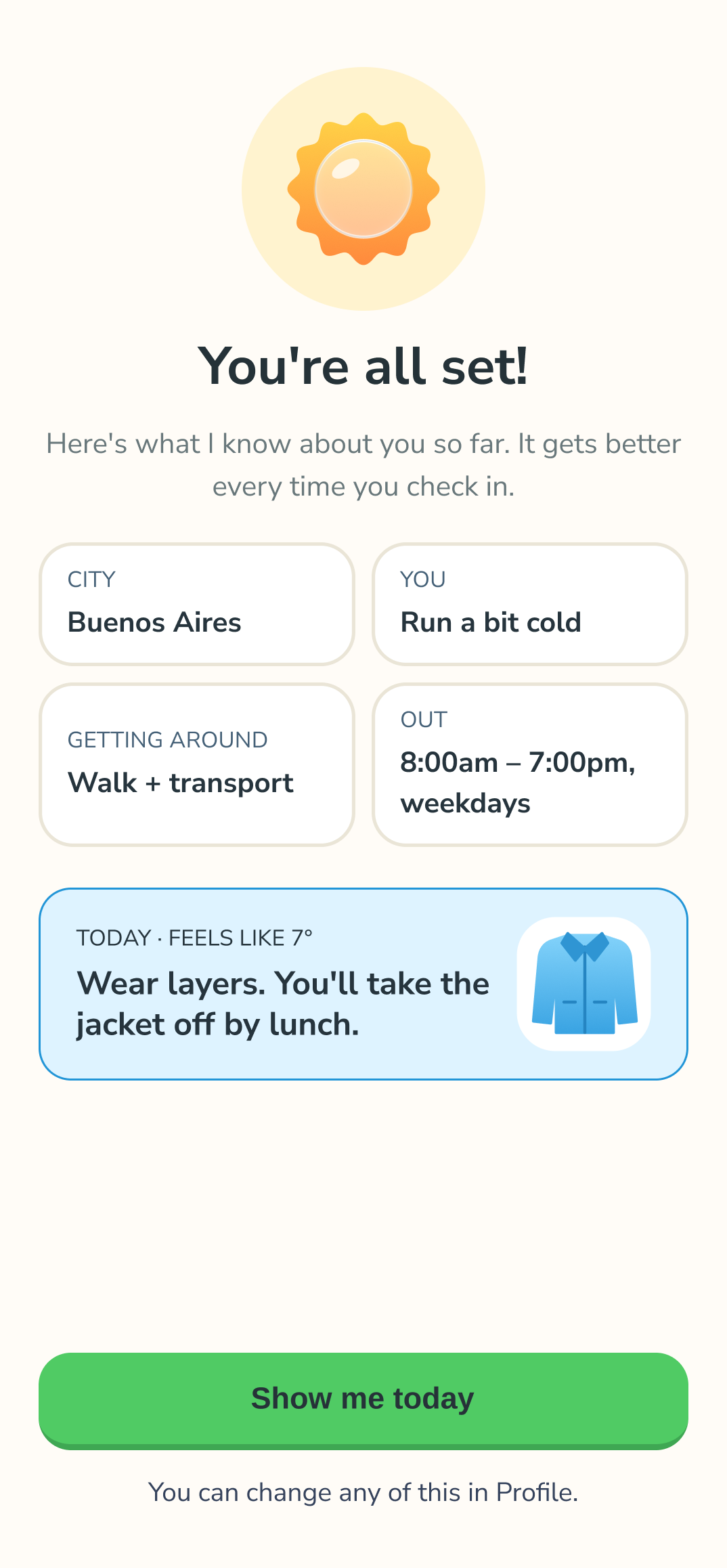
→ Useful from day one. More personal over time.
02One bad suggestion can break trust.
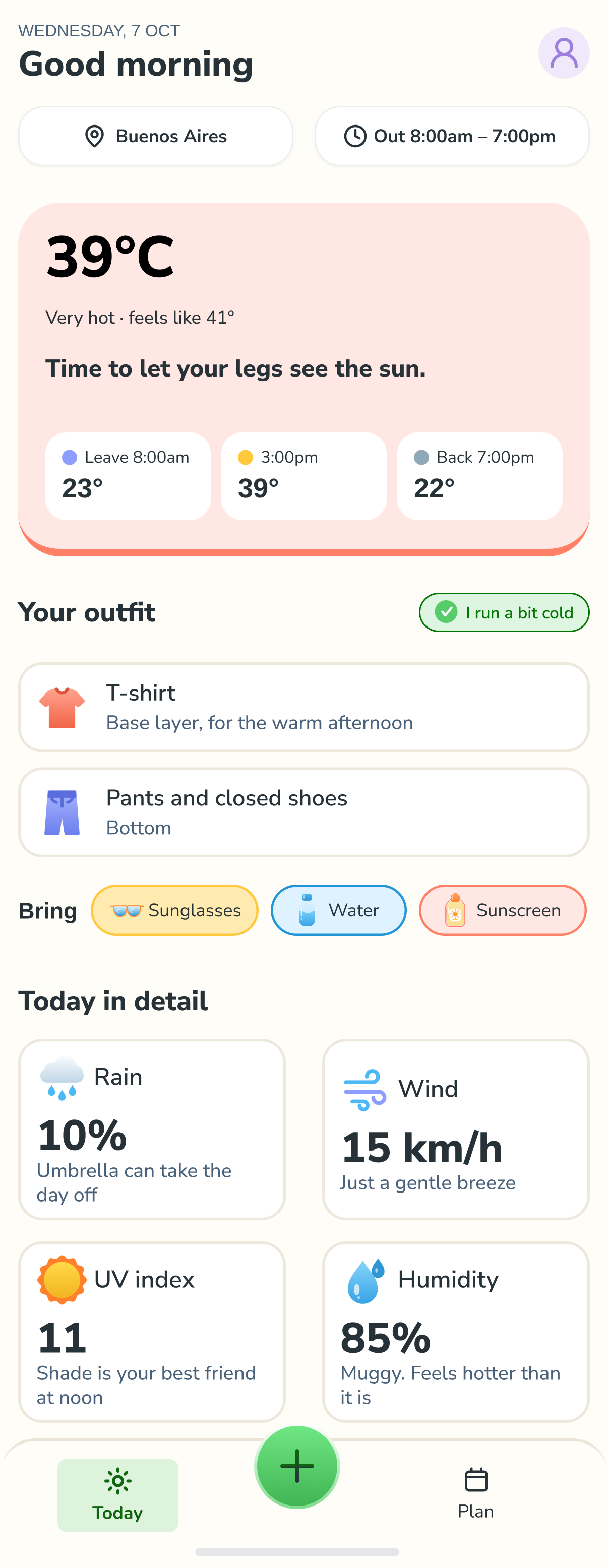
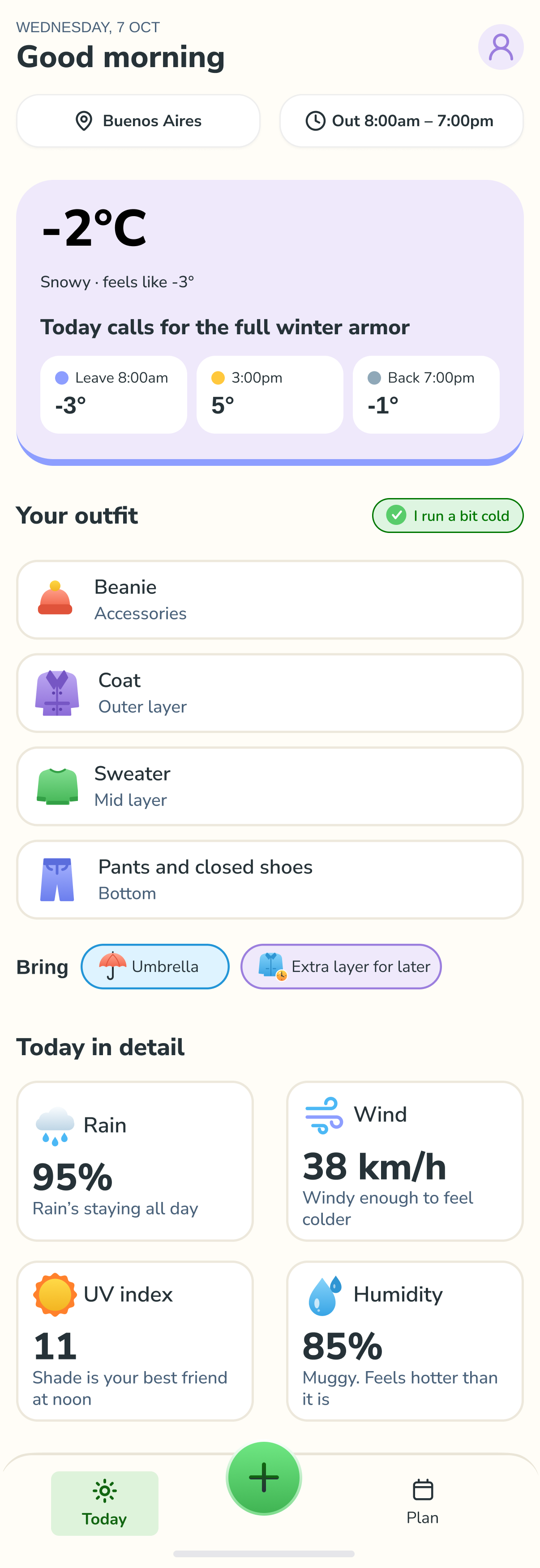
35% of reviews that mention the weather rated the experience 3 stars or lower. The complaints usually say that recommendations make no sense: sandals in the snow, sweaters in a heatwave.
→ The weather logic is the main product.
03Everyone experiences the weather differently.
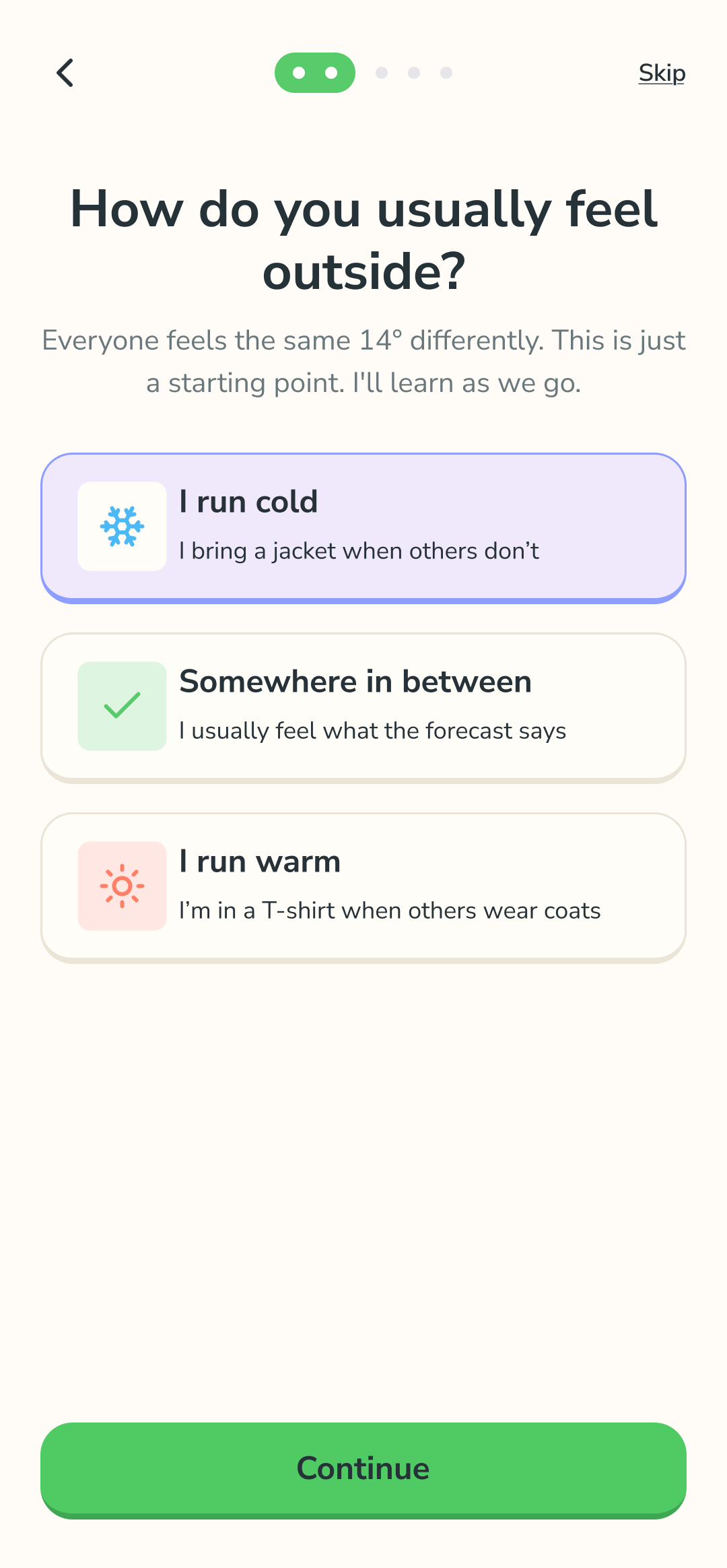
The same forecast can mean a light jacket for one person and a heavy coat for another. Most weather apps treat everyone the same, leaving users to figure out what works for them.
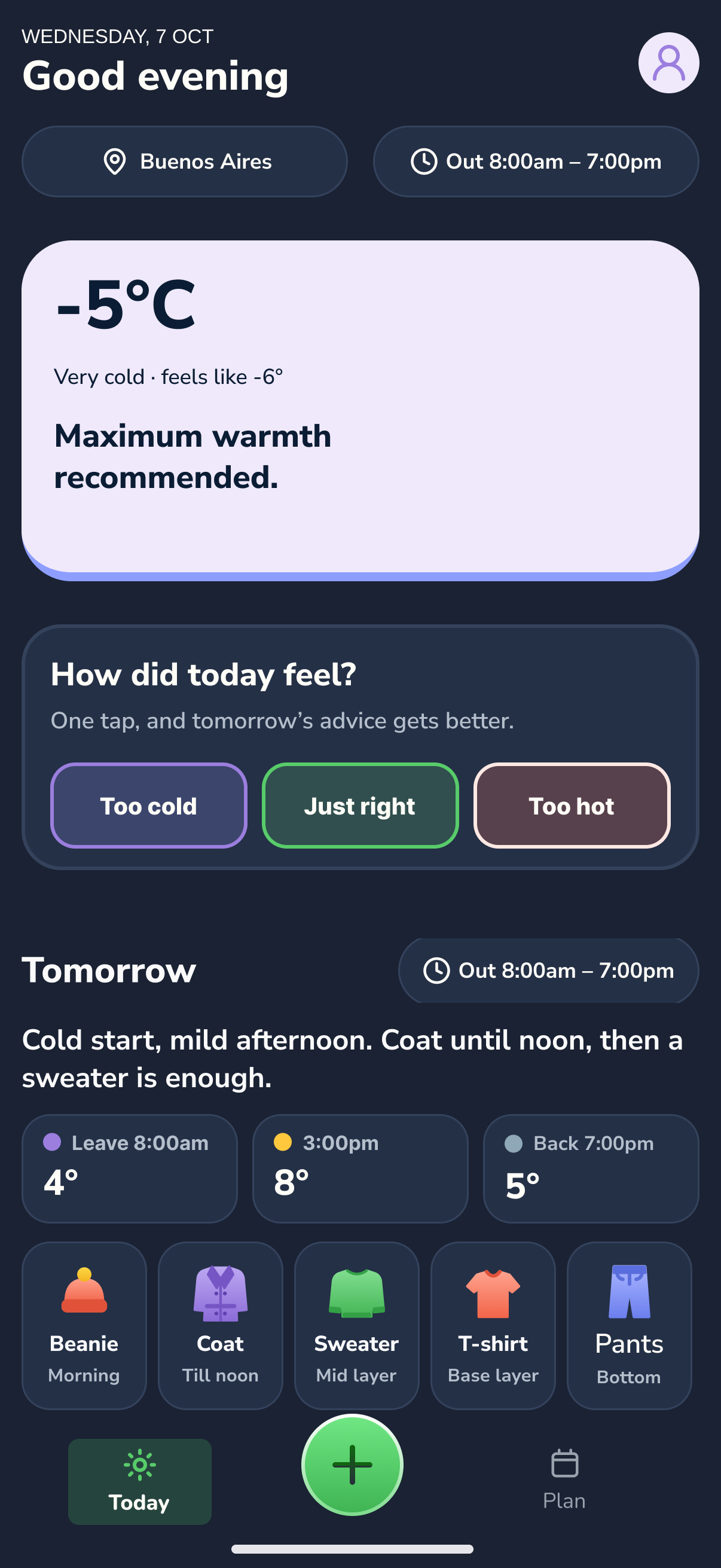
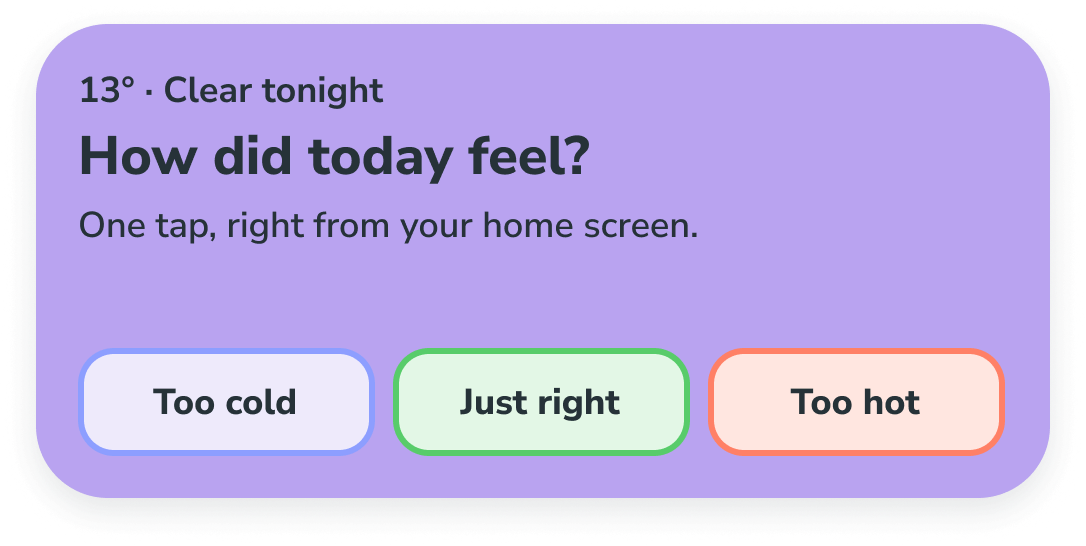
→ Personalize gradually, learning from every bit of feedback.
04Setup is why people quit.
“A whole day taking photos” before getting any recommendations. Users usually don’t have time before heading out.
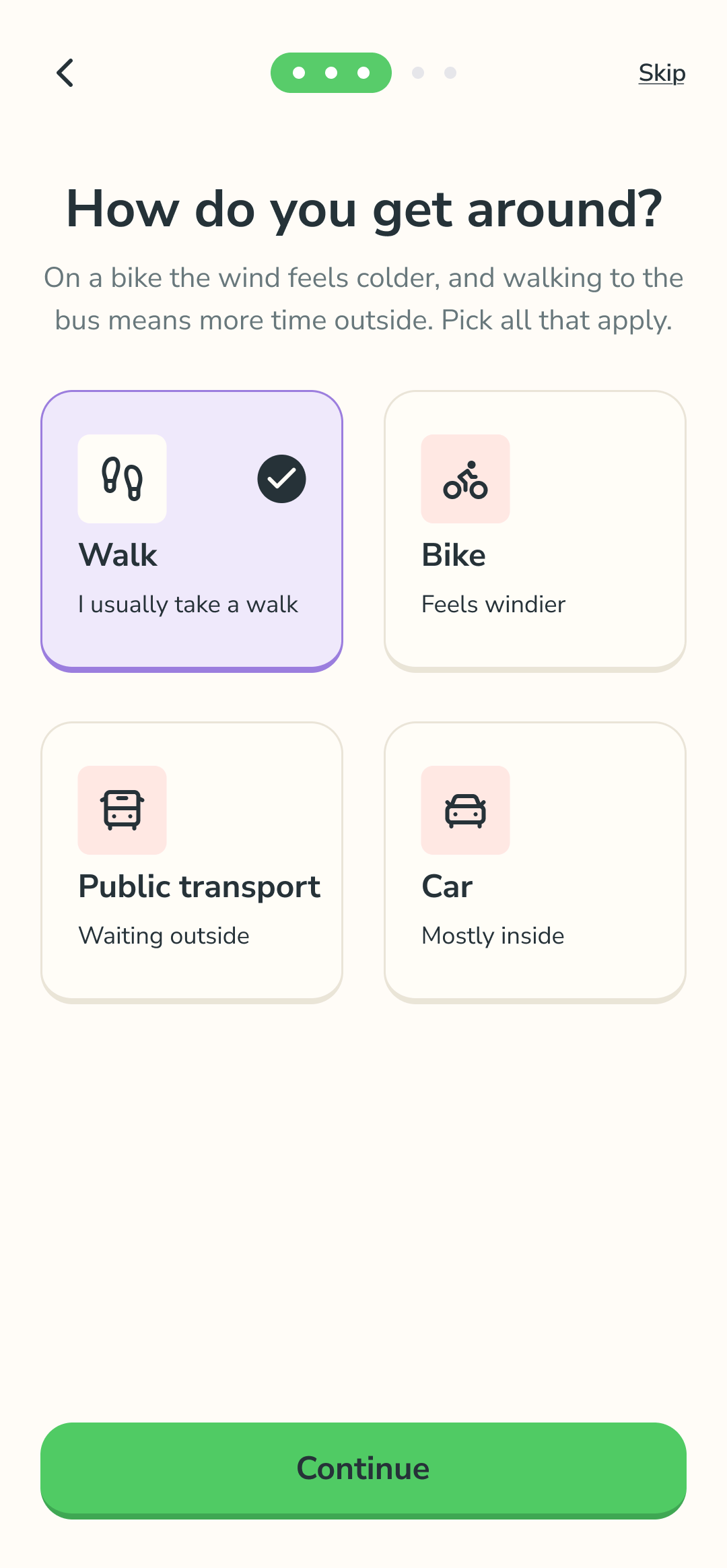
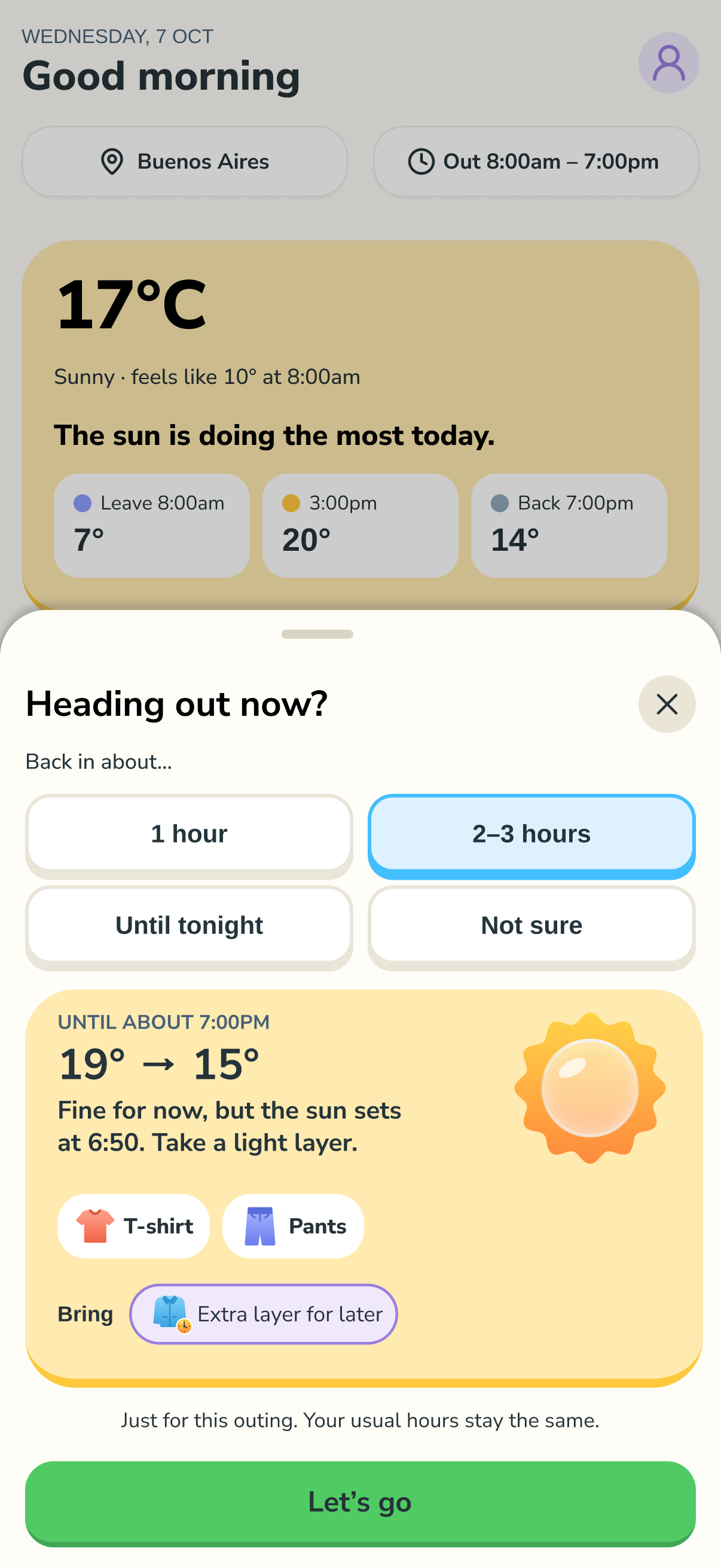
→ No closet catalog. Two questions instead.
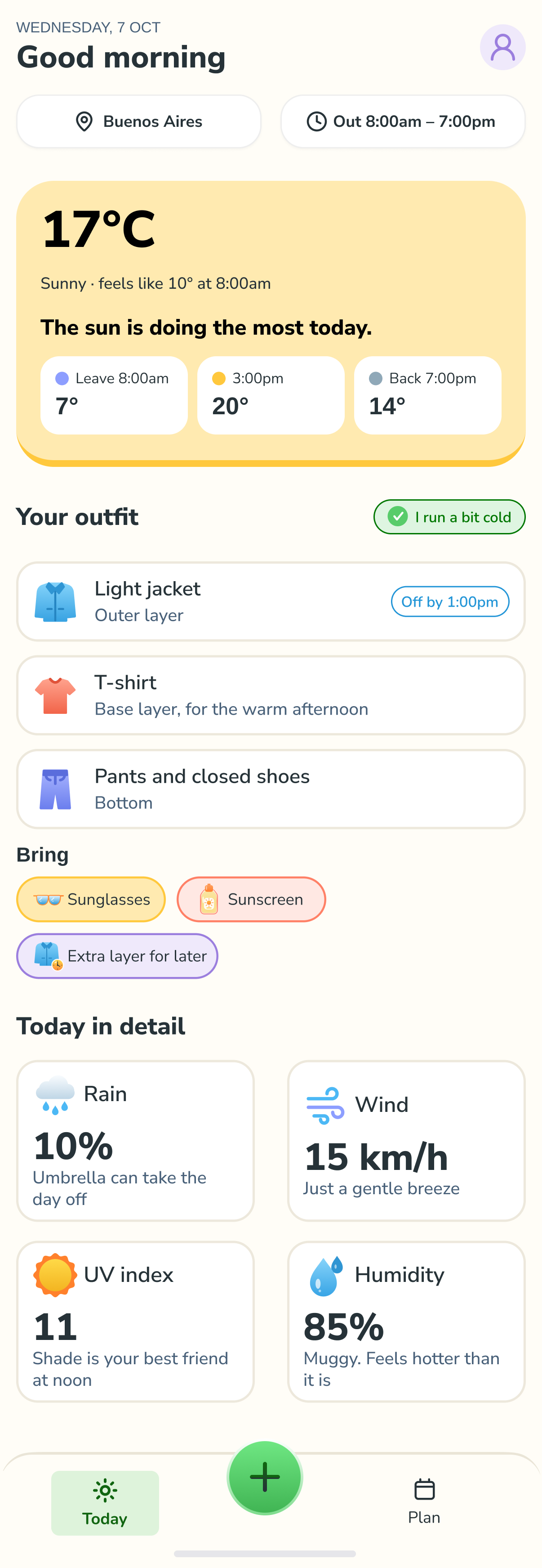
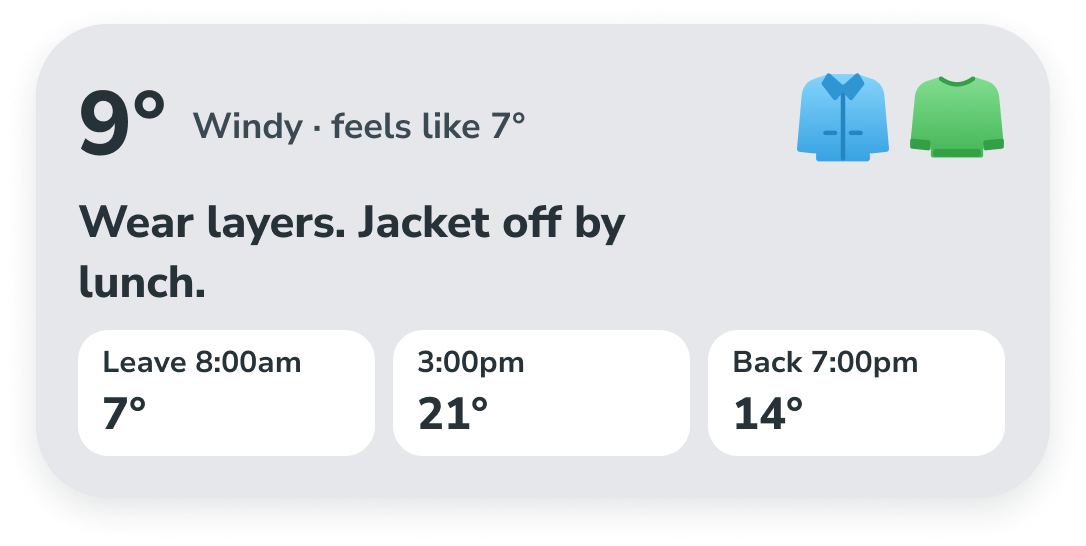
05Getting dressed is a decision you make for the whole day.
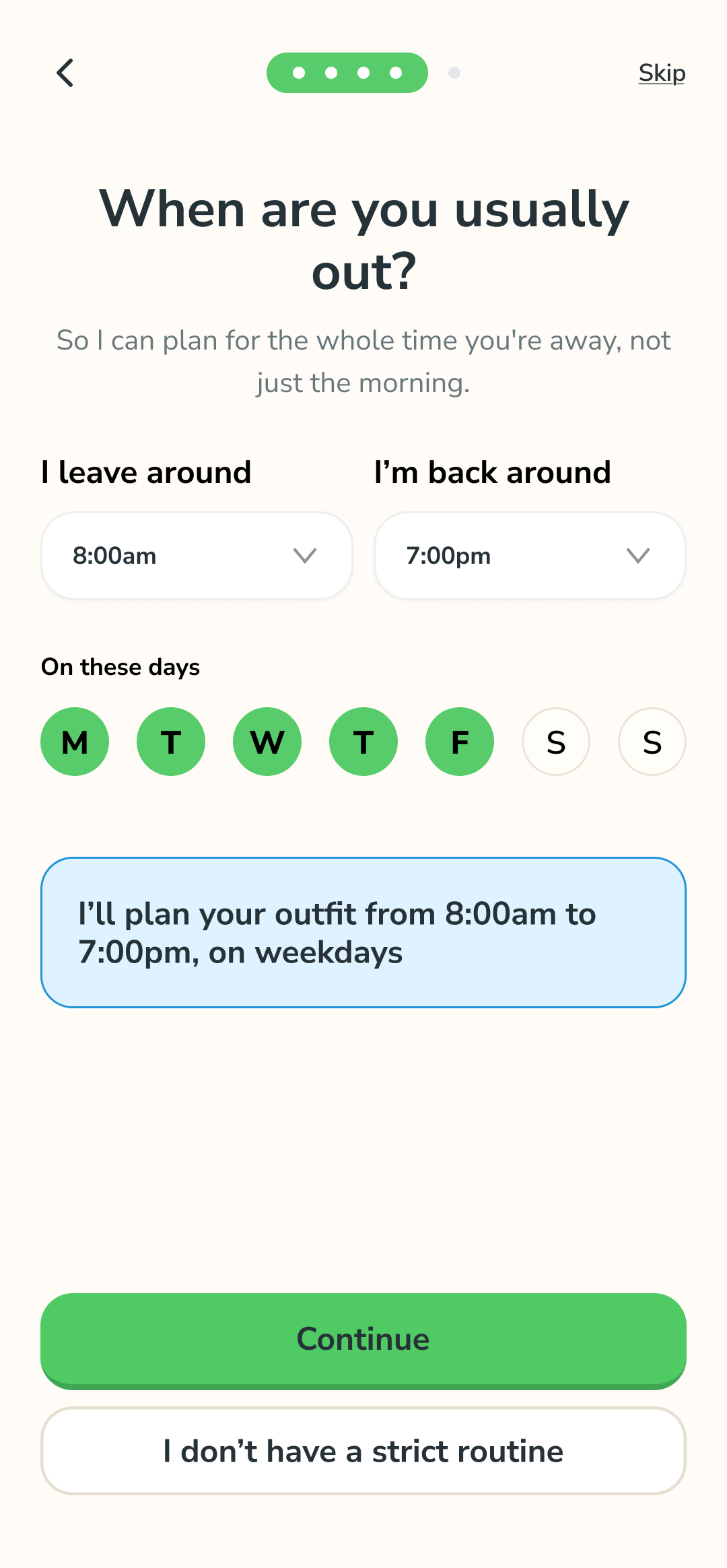
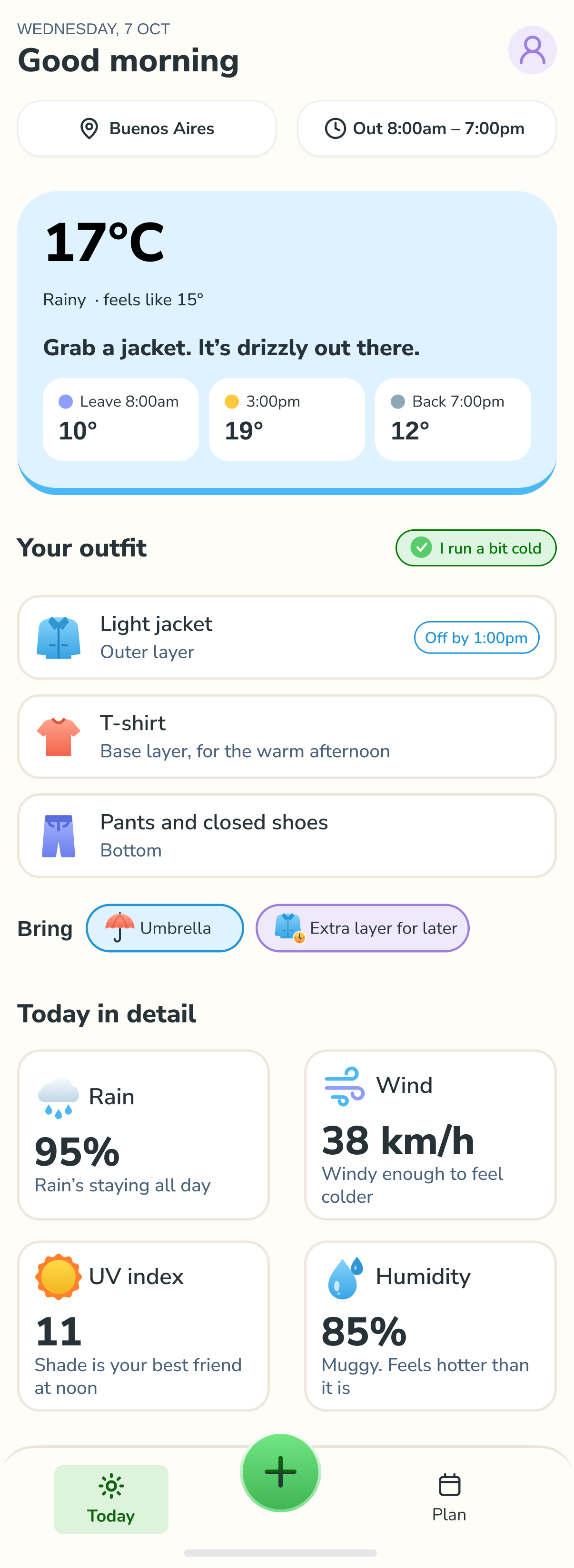
Many reviews mentioned layering, highlighting a common frustration: an outfit that works in the morning might be too warm by the afternoon.
→ Help people dress for the whole day ahead.
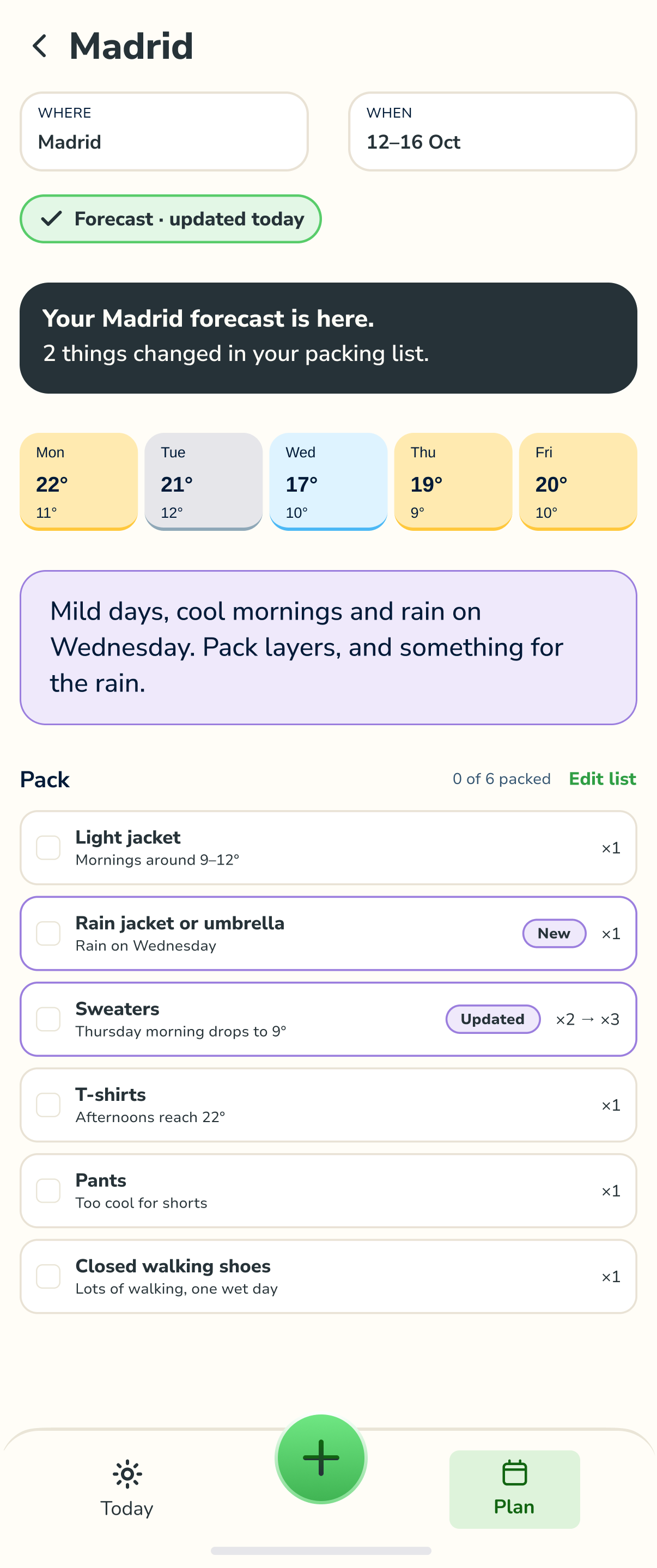
06People expect to plan for other places or trips.
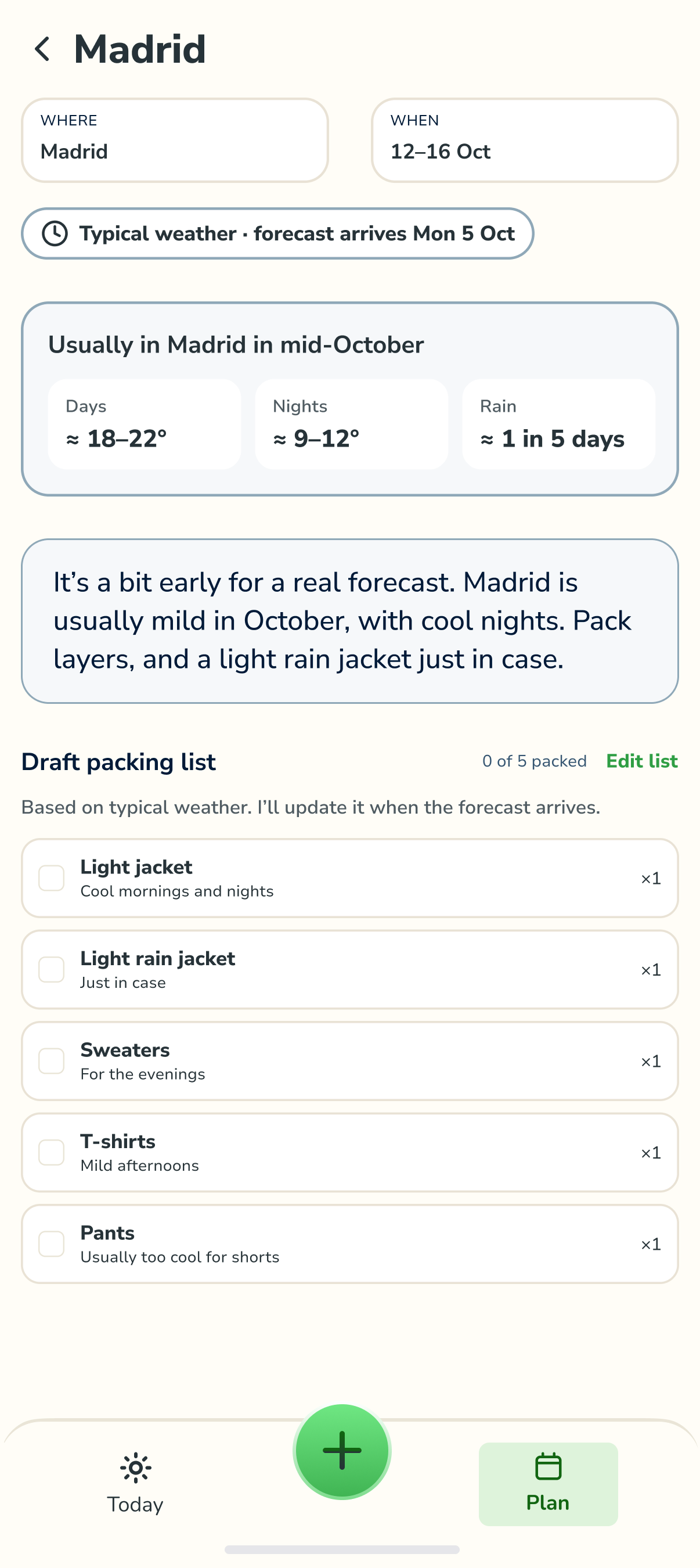
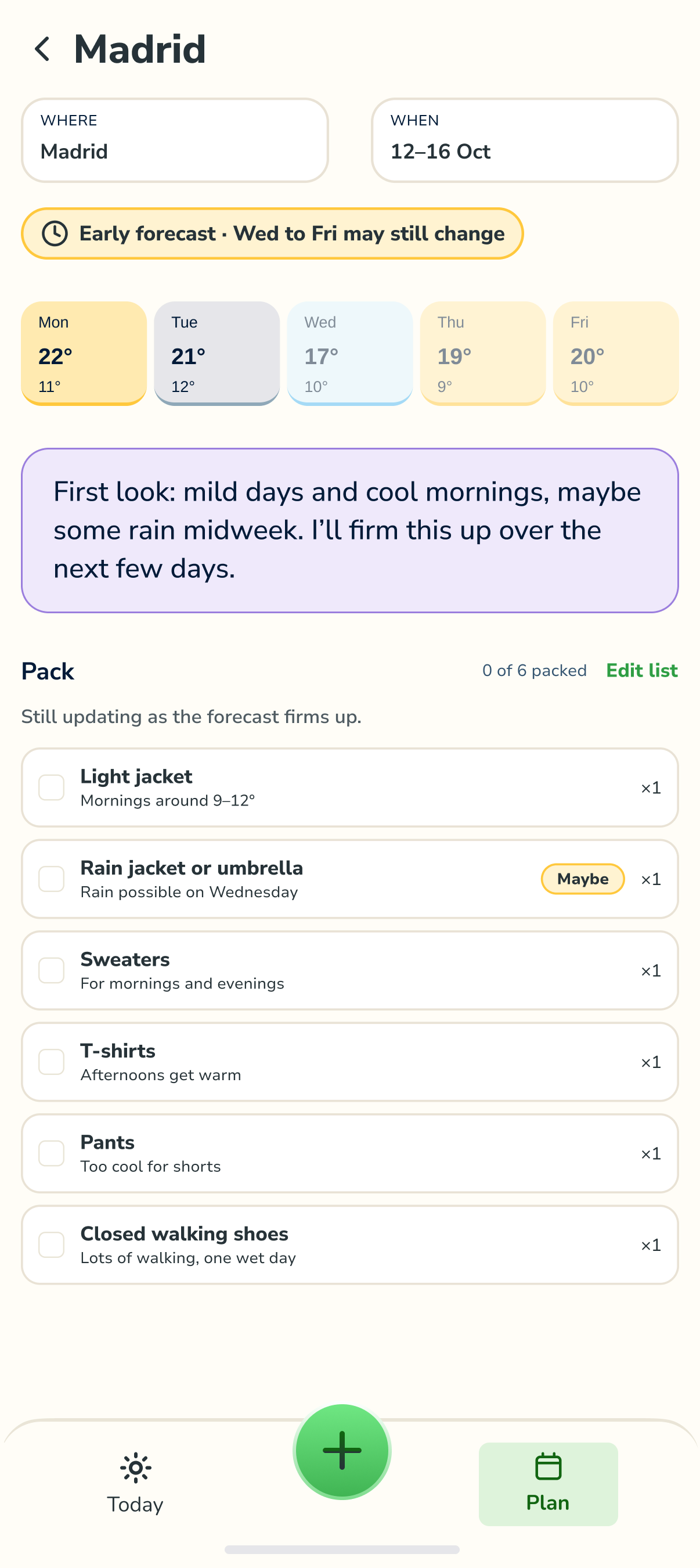
Many reviews ask to change the city or plan a trip.
→ A city search and a packing list.
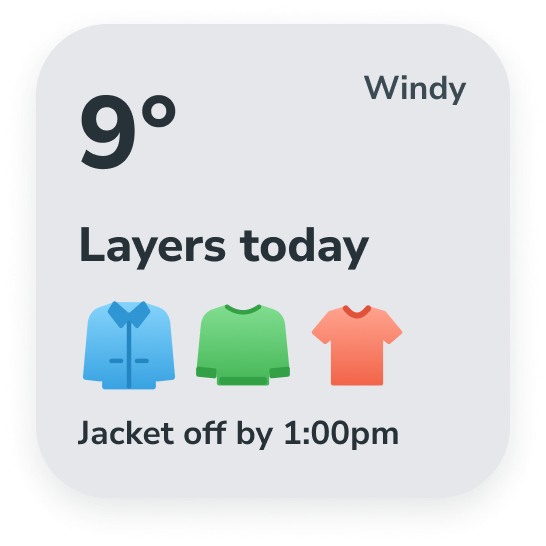
07Getting dressed shouldn’t feel stressful.
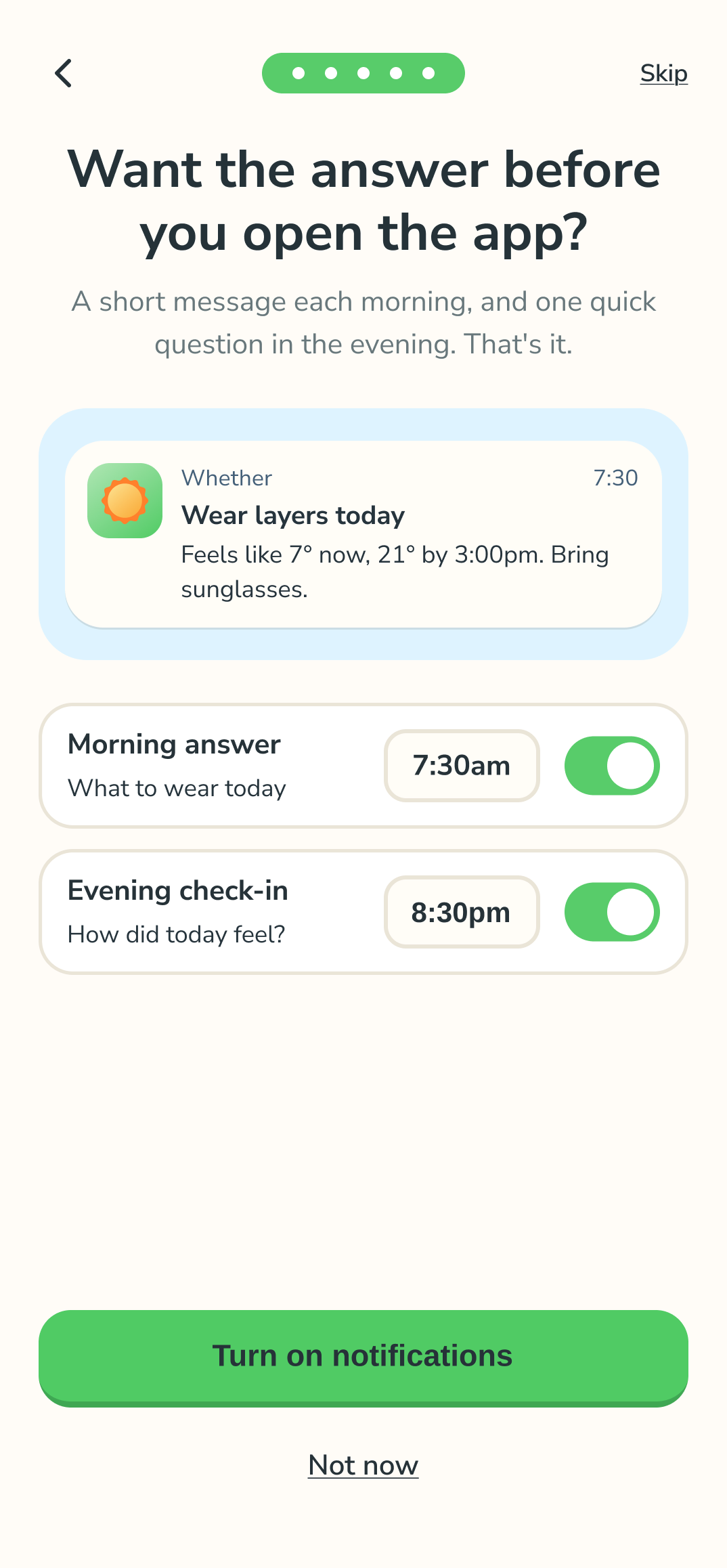
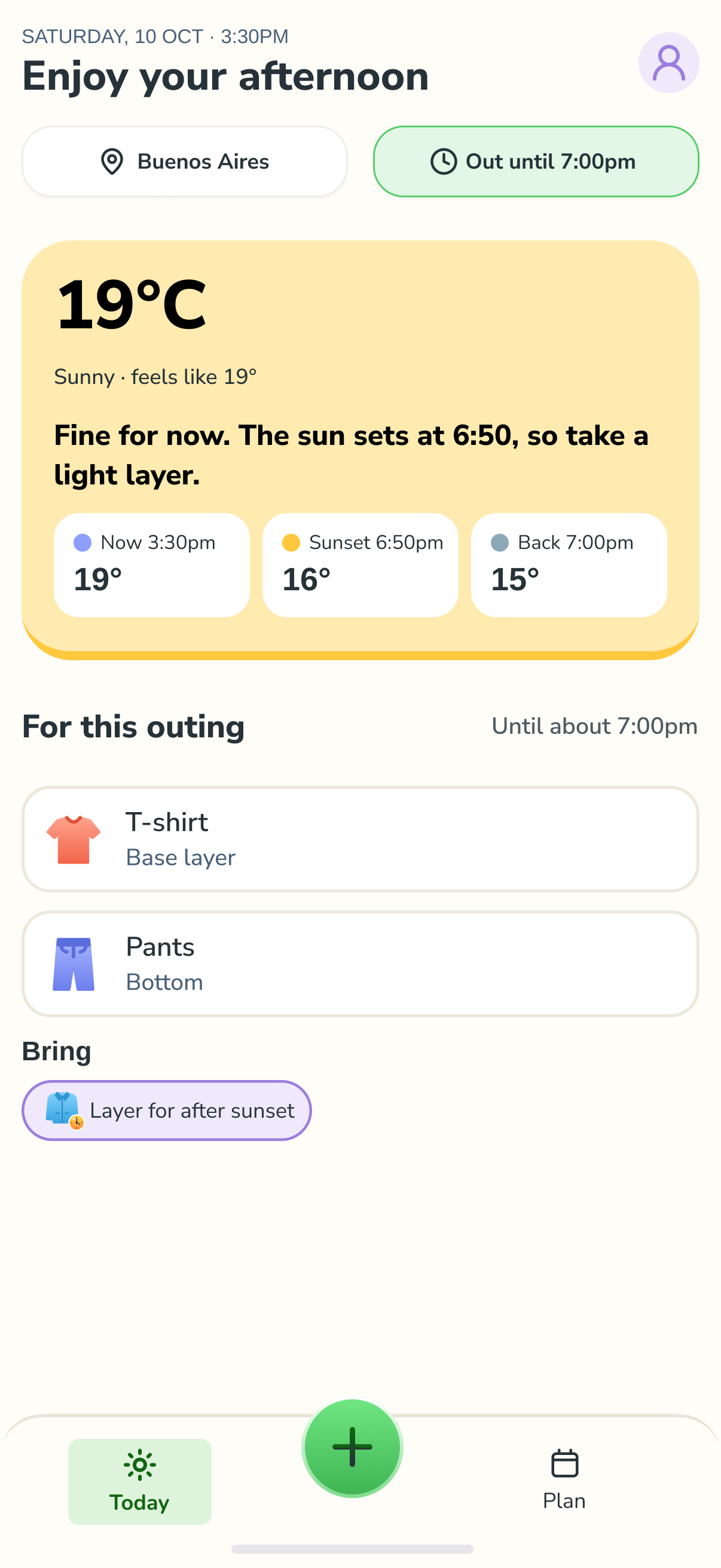
Users appreciate quick-glance widgets and clear, simple language. When deciding what to wear already feels overwhelming, more data only adds to the noise.
→ One answer, in simple words.